
Independent equipment research
Choose a dehumidifier that fits your home.
Compare the equipment, plan the drainage, and understand the numbers before you spend. Start with the space you need to dry.
Crawl spaces, basements, whole homes, and commercial equipment.

Choose your starting point
Start with your space
A low crawl space, a finished basement, and a ducted home system need different equipment decisions. Follow the guides for the space you have.
Crawl space
Low-profile equipment, access, moisture loads, and drainage.
Explore the guidesBasement
Portable and permanent options for finished and unfinished rooms.
Explore the guidesWhole house
Capacity, ducting, installed costs, and model comparisons.
Explore the guidesCommercial & restoration
Commercial equipment, LGR technology, and jobsite requirements.
Explore the guidesSizing & ownership
Rating conditions, electricity costs, monitoring, and maintenance.
Explore the guidesEquipment decisions
Compare your main options
These guides bring the important specifications, installation constraints, and tradeoffs together.

Best Crawl-Space Dehumidifiers: Capacity, Clearance, and Drainage
Compare compact gravity models, integrated-pump options, and low cabinets using consistent capacity conditions and the installation details that matter.
Read the guide : Best Crawl-Space Dehumidifiers: Capacity, Clearance, and Drainage
Best Basement Dehumidifiers: Portable and Permanent Options
Compare portable and permanent basement dehumidifiers by the problems they solve, with practical guidance on capacity, temperature, drainage, and ownership costs.
Read the guide : Best Basement Dehumidifiers: Portable and Permanent Options
Best Whole-House Dehumidifiers: Capacity, Ducting, and Total Cost
Choose a whole-house dehumidifier by moisture load and installation requirements, with clear distinctions between current AprilAire, Santa Fe, and AlorAir model families.
Read the guide : Best Whole-House Dehumidifiers: Capacity, Ducting, and Total CostBefore you order
Get the fundamentals right
Compare the conditions behind the number.
Portable, whole-home, AHAM, and saturation figures can tell different stories. Learn what the labels mean.
Read the ratings guide →DrainageGive the collected water a dependable route.
Work through gravity drainage, integrated pumps, and external condensate pumps before choosing a machine.
Plan the drain route →How we approach a buying decision
Our articles identify the equipment version, link to the documents behind material claims, and explain where a product fits. They separate published specifications from independently measured performance.
Exact versions
A familiar model name can cover different controls, pumps, refrigerants, and bundles. We identify the configuration being discussed.
Practical tradeoffs
Capacity is one part of the decision. Physical access, drainage, serviceability, and the intended use can change the shortlist.
Sources you can follow
Manufacturer documents, government guidance, and building-science resources accompany the important explanations. Read our editorial methodology.
Look closer
Model reviews and focused comparisons
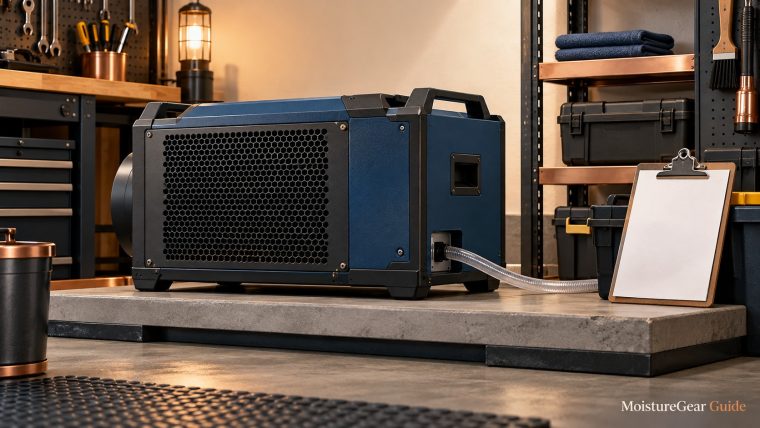
AlorAir Sentinel HDi90 Review: Capacity, Pump, and Ownership Costs
The base HDi90 combines higher published extraction with integral pumping. Evaluate the actual moisture demand, discharge route, access, and support together.
Read the guide : AlorAir Sentinel HDi90 Review: Capacity, Pump, and Ownership Costs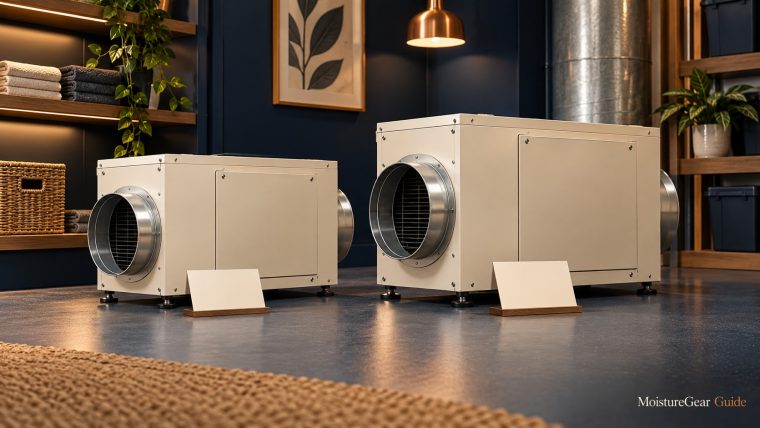
AprilAire E080 vs E100: Capacity, Fit, and Cost
The E100 adds capacity and airflow without a larger nominal cabinet. Choose between them by assessed load and the proposed installation, then verify the exact suffix.
Read the guide : AprilAire E080 vs E100: Capacity, Fit, and Cost
AlorAir Storm LGR Extreme Review: Published Specs, Pump, and Fit
A specification-based Storm LGR Extreme assessment covering the 85-pint AHAM rating, app and non-app versions, drainage planning, and purchase-specific checks.
Read the guide : AlorAir Storm LGR Extreme Review: Published Specs, Pump, and FitWhat will it cost to run?
Use operating watts, enabled hours, duty cycle, and your electricity price to estimate the monthly bill. Then compare the estimate with measured energy use once the unit is installed.